Neuroscience of Love: How to Keep Love Strong

neuroscience_on_love“Does he love me?” This is the question I heard most often while consulting on intercultural couples’ relationships for over the past ten years. In the past, Koreans couldn’t understand the idea of seeing each other before establishing exclusivity. Korean women were very wary of being played. About five years ago, new words appeared to reflect the changing dating culture: Some (썸), woman person friend (여자 사람 친구), and man person friend (남자 사람 친구). “Some” means a causal relationship before becoming a boyfriend-girlfriend. Woman/Man person friend means a non-romantic friend of the opposite sex.

However, many Koreans still question whether a friendship is possible between a man and a woman. Many Korean women feel uncomfortable about their foreign boyfriend/husband’s interaction with other Korean women – whether they are a classmate, a teacher/tutor, a yoga trainer, a language exchange partner, a coworker, or a neighbor. The reason why a lover’s opposite-sex friend (for heterosexuals) gets on our nerves is the anxiety of losing the significant other.

Anxiety arises from the activation of the amygdala within the limbic system, which is known as the mammalian brain. As indicated in the name, this part of the brain is shared by all mammals, including cats and dogs. It is an automatic defense system that detects potential danger and sends a warning signal in real time. Anxiety is a warning signal that the brain sends us to protect our survival.

For humans, reliable companions, such as family and friends, are critical to our survival. It is natural to feel anxious about those who can potentially steal our no.1 companion. However, mismanaged anxiety can ruin a promising relationship. When anxious, we get hyper-sensitive to minor change in our lover’s communication habits and social interactions. A concern for cheating often leads to interrogation, complaints, and even attempts to violate his/her autonomy. Unfortunately, a feeling of being on a tight leash makes people want to escape.

intercultural relationshipThen, what are better ways to manage anxiety for a happy relationship?

  1. Take Out “Me” and Think from his/her Perspective

Because we cannot measure the size of love by a ruler, we often use the quantity and quality of contact and the speed of response for a sign. When the level of communication fails to meet our personal standard, we begin to worry about dwindling love. Like other animals, people are by nature self-centered. We tend to put ourselves at the center of our thinking.

When you notice change in communication with your lover, think first in his/her position. “Is he/she busy?” “Is he/she under stress?” “Is he/she tired?” Our mental energy is limited like cellphone batteries. When tired or stressed, we have little energy left to care for others. In such situations, we don’t have energy to process complaints and instead want to be cared for. Give him/her a long (20 secs or more) hug, kisses, or caring words, which trigger the release of the love hormone oxytocin.

  1. Just Say You Feel Insecure, instead of Acting Cool

If we pretend to be cool when we are actually not, the amygdala will only raise the volume of its alarm. The brain’s primary goal is to protect our survival, so it sets off the alarm at the slightest hint of a potential threat. First, accept your anxiety and then think about what makes you anxious. The act of thinking soothes the nerves to some degree. However, when anxious, the brain tends to focus on negative information and skews uncertain information negatively. If something bothers you about your lover’s relationship with someone, just say so. Give him/her a chance to explain himself/herself. The conversation will help you determine if his/her close friend is a real threat and help ease your tension.

  1. Set a Boundary for Friendships

To minimize unnecessary arguments, set a boundary for friendships. From March 11 to 13, 2019, I conducted a survey of Korean women about their boundary for friendships with opposite-sex friends. Among 201 participants, 41% answered that they are okay with their boyfriend/husband meeting female friends if they are informed in advance, 33% leave it up to their boyfriend/husband, and 17% are okay with their boyfriend/husband maintaining friendships with female friends on SNS. Only 9% answered female friends are unacceptable. Additionally, many wrote that a one-on-one meeting with an opposite-sex friend, besides old friends, is unacceptable. Instead of restricting relationships based on sex, negotiate a reasonable boundary for friendships.

  1. Focus on Your Relationship

The best shield against cheating is strengthening your relationship. Ultimately, love is for our own happiness. Happiness discourages your lover from engaging in actions that may harm his/her relationship with you. We feel happy when the brain releases happiness hormones, such as serotonin, dopamine, or endorphin. When we feel happy, we associate the happiness with the person we are with at the moment.

The brain is wired to seek love, praise, and food because they are critical to human survival. Praise motivates us to repeat actions that are likely to be praised. For this reason, dopamine is also called a motivation hormone. So, when your lover does something that makes you happy, praise him/her generously. Just the normal routine of eating together also boosts dopamine and endorphins. In addition, happy memories increase serotonin, shielding your love and happiness against any threat!

  1. Build self-esteem

Anxiety about losing a lover often stems from a lack of self-esteem. With low self-esteem, you constantly worry about whether and when your lover would find someone more attractive and leave you. You end up seeking constant affirmation of love and trying to test his/her love. There is no one but you who can build that esteem. If you feel anxious about losing your lover, make more time for yourself by learning something new or pursuing a hobby. Time well-spent for yourself will certainly increase your charm!

This column is also available in Korean. 이 칼럼은 한국어로도 제공되고 있습니다: https://blog.naver.com/sum-lab/221493818135
 

Standard

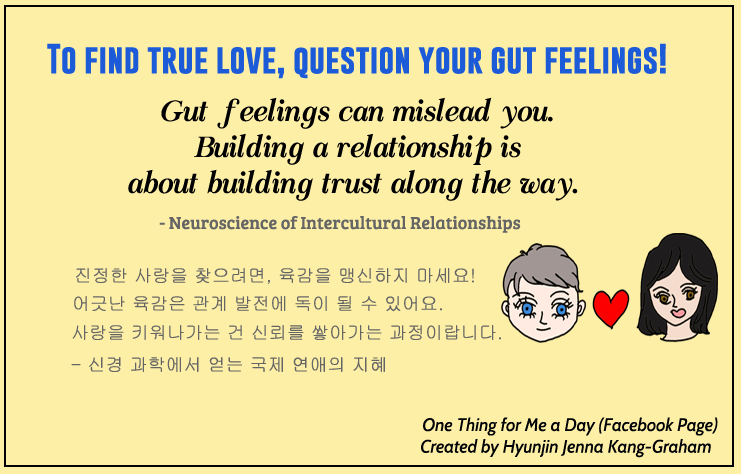
To Find True Love, Question your Gut Feelings!

love

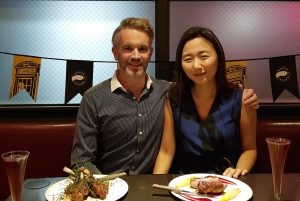
My hubby and Me on the 14th anniversary of our first date

I will write a weekly article about intercultural relationship. For the last 11 years, I have dedicated myself to reducing stereotypes about intercultural couples, contributing to increasing acceptance of cultural and ethnic diversity in Korea. Due to the belief in a one-race nation, intercultural couples in Korea were stigmatized. In January 2008, I started blogging about intercultural relationships. A year later, I created an online community for Korean women who are in romantic relationships with foreign men. It became the largest online community for intercultural couples in my country.

Many Korean women have come to me for advice about their relationships with their foreign boyfriends or husbands. In my weekly articles, I will share the most common issues that intercultural couples experience and my advice about those issues. One of the biggest concerns that Korean women have at the beginning of a relationship is whether they are being taken seriously or being played with. We call the latter the “Enjoy (Partner).” Although not all relationships need to end in marriage, Korean women want to establish exclusivity early on and prefer a relationship that puts marriage on the table.

At the beginning of a relationship, Korean women are wary of “Yellow Fever,” or the Asian Fetish. They are concerned about whether foreign men pursue them out of genuine attraction, or out of a sexual fantasy about Asian women. Having a preference for certain physical characteristics is okay, but we all want to be loved for who we are, not for being a member of a specific racial category.

Many Korean women are unsettled by their boyfriends’ interactions with other women, especially with exes or other young Korean women. Staying in contact with exes or keeping their pictures on the computer is seen as a threat. A refusal to cut off contact or delete pictures is seen as a sign of continued feelings. In extreme cases, some request their boyfriends to get permission before meeting any women. There is common advice that Korean women give to each other, “Trust your gut. If a man makes you doubt, he is not into you.”

A gut feeling comes from the prefrontal cortex’s interpretation of emotional responses triggered by the amygdala or the Lizard Brain. To ensure our survival, the Lizard Brain reacts to any potential danger. Then, the prefrontal cortex makes judgments about the perceived danger by drawing from past memories in the hippocampus, the brain’s hard drive. What we need to know about memories is that they are malleable rather than fixed. Neuroscientist Dr. Alex Korb suggests that our memories are put together from bits and pieces every time we recall them. Our emotion at the time of recall skew our memories to the positive or negative.

In fear, we are likely to paint our memories negatively and find cues that support our concern. That is, we are likely to find reasons to worry and invite jealousy into our minds. At the core of our doubt in relationships is often fear. Kristen Ulmer explains in her book the Art of Fear that the fear of abandonment lies behind accusations, immature anger, and unreasonable demands between couples.

Building a relationship is about building trust. Uncertainty at the beginning of a relationship is certain. The unknown has two sides. It excites us and scares us at the same time. Cherish the flutter you get and trust each other. Having a watchful eye on a partner never helps a relationship. Nobody wants to be accused, questioned, and watched. Arguments, accusations, and surveillance will make anyone unhappy and ruin potentially great relationships. Question your gut feelings. Your gut feelings or suspicion may turn out to be true. If they betray your trust, they don’t deserve your love anyway. Either way, question your gut feelings! If we let gut feelings rule our lives, we will lose the chances for great things – new opportunities and relationships.

Standard

Start a Good Habit to Create an Upward Spiral!

Today is Friday. After a full week of work, it is understandable to experience low energy. I started my day with meditating, washing the dishes, and cooking breakfast as usual. Although nothing was out of the ordinary, I felt low on energy, which made me feel irritable and less patient. Starting the day on low energy puts us in a vulnerable position because we have to squeeze out our last bits of energy just to get through the day. Then, we tend to perceive any minor change as a nuisance because handling the unexpected is taxing on the brain. Habits or routines run automatically, not involving the prefrontal cortex or the Thinking Brain, but change demands the brain to think.

Emotional management is critical to our productivity and happiness. Negative emotions can soak up our mental energy. It also starts a downward spiral that damages our work, health, and relationships – the three most important things to our happiness. Emotions are highly contagious, affecting those we care about. Today, my kitties also seemed to sense that I was in a bad mood. They stayed unusually quiet and didn’t demand playtime. In his book “the Upward Spiral,” Dr. Alex Korb suggests that small changes in our lifestyle can rewire the brain and create an upward spiral.

Our emotions are the results of communication between the limbic system and the prefrontal cortex. Dr. Korb calls the limbic system “the Feeling Brain” and the prefrontal cortex “the Thinking Brain.” The No.1 priority of the brain is to keep us alive. So, the Feeling Brain gets scared easily and the Thinking Brain gets worried easily. In general, the brain is wired to pay more attention to negative information than positive because it is better to be safe than sorry.

Emotions are there to ensure our survival by driving us to act. When the Feeling Brain gets anxious or scared, the Thinking Brain can calm it down. We don’t have conscious control over the Feeling Brain, but we do over the Thinking Brain. Unfortunately, the Thinking Brain gets tired easily, so it is stingy with its energy. To nudge the brain to work with us for our goals, we need to treat it strategically.

Here are some tips to create the Upward Spiral that I learned from Dr. Alex Korb’s book, the Upward Spiral.

  1. Sleep well. Sleep cleans the brain and increases dopamine and endorphins, strengthening memory, lowering stress, and boosting mood.
  2. Hug someone or pet furry friends. We are social animals. Physical contact comforts us by releasing feelgood chemicals – oxytocin, dopamine, serotonin, and endorphins.
  3. Take a walk. Movement or exercise strengthens the brain and increases serotonin, dopamine, and norepinephrine, lifting mood and enhancing stress resilience.
  4. Focus on what you can control. Feeling in control puts us at ease. Forget about results or the future. Just see what you can do here and now and do it.
  5. Make a decision and proceed. Indecisiveness wastes limited brain resources, tiring you out. Making a decision itself eases the nerves. Do one thing for you a day!

Please like my page and find your own inspiration: https://www.facebook.com/onethingformeaday/

Standard

Use Fear as Fuel!

Yesterday, I skipped posting on my blog but still completed my One Thing for Me a Day. I started the day with meditation, rode the stationary bike for 30 minutes, and cleaned the house. At night, I binge ate a Margarita pizza, strawberries, and apples. The binge eating helped me feel happier and motivated today. Don’t feel guilty when you slip up. As long as you don’t let the slip-up stop you from forming new habits, you are still on track.

The single emotion that catches me the most has been fear. In her book the Art of Fear, Kristen Ulmer, known as the most fearless woman extreme skier, suggests that we are so addicted to who we believe we are that we are afraid of deviating from that fixed identity. Initially, our habits form our identities. If we act certain ways enough times, those behavioral patterns feel natural to us. Then, we form our own sense of ourselves – who we are and who we are not.

From early childhood, I loved to read and write, so I saw myself as a reader and writer, but not as a speaker. As a matter of fact, I was mute during most of my adolescence. Many of my classmates believed that I was physically incapable of speaking. My teachers would ask me why I wouldn’t speak. I didn’t know the answer and thought I might have trauma that I don’t remember. Now, I have a good guess. There were probably moments when I didn’t know what to say and remained quiet. It repeated enough times that I began to feel that it would be strange if I spoke.

What eventually pushed me out of my shell was a strong desire to share my ideas. I was driven to talk about my ideas. Desire stumped fear. I raised my hand whenever professors asked for presenters. Later, I would regret it, “What did I get myself into?” However, I repeated the same thing over and over again. I put myself into uncomfortable situations where I could not back out. For the last 10 years, I have participated in TV talk shows and numerous interviews, lectured to large audiences, and discovered my talent in building a quick rapport with strangers.

Although I changed a lot, fear is still part of my life. Fear is a natural emotion that all animals have to survive. Our emotional responses are triggered by the amygdala, which Seth Godin calls “the Lizard Brain.” The amygdala or Lizard Brain is a 500-million-year-old structure that all animals share. It creates emotional responses to call on the body to take appropriate action. Fear is the most fundamental emotion for survival. To protect our lives, fear drives us to take action – fight, flight, or freeze.

What makes humans distinctive is the youngest part of the brain called the prefrontal cortex. We humans have the proportionally largest prefrontal cortex of all mammals. After receiving emotional responses from the amygdala, the prefrontal cortex interprets the information and makes judgments and decisions. What it means is that we cannot control our first emotional reaction but we have the power to change our feelings.

The lizard brain is a wimp and slacker. It loves the status-quo and certainty. It refuses to budge until an imminent danger triggers off an emergency alarm. To the lizard brain, uncertainty is scary and certainty is comfy and irresistible. So, in fear, we procrastinate and look for all kinds of excuses to not change. Kristen Ulmer emphasizes the key to overriding fear is to embrace it. Accept that you are scared and switch your focus from resisting fear to thinking about what scares you – the situation at hand. Then, you can think about your next move.

american shorthairOnce we take the first action, fear quickly subsides. Our large prefrontal cortex sometimes makes us overthink. Follow what cats (or dogs) do! When my kitties hear an unusual sound, they get up to see if there is a real danger. In our lives, change involves accepting things that are unfamiliar, unknown, and thus scary. As Kristen Ulmer says, fear is a sign that we are on the right track for growth. Use fear as fuel. Fear is fuel. Forget who you think you are. Make a new self! Habits will make us become who we want to be. Soothe your fear by simply doing One Thing for You a Day!

Please like my page and find your own inspiration: https://www.facebook.com/onethingformeaday/

Standard

Control Your Time to Your Advantage!

My excuse for ordering delivery food and not exercising has always been “I don’t have time.” It is true that I often worked to exhaustion. I believed the number of hours spent and exhaustion indicate hard work. Many businesses still pay their employees by the hour. As a communication consultant, I consult on clients’ content and rewrite it. I used to spend an entire week working on one resume. If I got it done quickly, I felt like I didn’t put in my 100%. Now, I can get the same work done in a few hours. It is not only because I have over 10 years of experience, but also because I learned to manage my time.

By being aware of our perception of time, we can make our time go by slower or faster to our advantage. In his book, the Power of Time Perception, Jean Paul Zogby, suggests that the brain’s information processing speed affects our experience of time. When the brain processes sensory information faster, we experience time running slower. My favorite MMA fighter was Anderson Silva. He seemed to be able to see a split-second opening in his opponent’s defense. That was probably because he was so focused and saw every movement in slow motion. Simply put, when we are focused and alert, our brain is sharp, getting more work done in a shorter time. More free time!

cute kittySometimes, we want time to run faster. I want my exercise time to go by quickly. When I am on the stationary bike, time seems to creep by. Zogby suggests that we experience time through change. All I do on the stationary bike is mindless pedaling. No change whatsoever. No wonder the stationary bike is so boring. Still, I like that it allows me to work out at home. My solution was to add change to my view during my workout. I began watching Deadliest Catch while on the bike. Seeing those high-testosterone Alaskan crab fishermen excites me and I lose track of time. Before I know it, 30 minutes go by. Afterwards, about 15 minutes of the show remains. Then, I use the extra time to stretch my body.
I no longer say “I don’t have time” because what it really means is that I don’t have time for a specific activity. I prioritize what is important to me. Yes, I don’t have time for other things that are not on my priority list at the moment. We can only do one thing each moment. After the start of my One Thing for Me a Day project, I think about what is most important to me every day and what I should learn and try the next day.

Adding new elements to life is essential to our happiness. Zogby suggests that new experiences create more memory markers. The more ‘firsts’ we create, the richer our life will become. One Thing for Me a Day is my first-time keeping track of my daily actions online – on a Facebook page and in dual languages – English and Korean. I am rediscovering the joy of writing again. Now, I am actually surprised by how quickly I wrote this post. I have so much extra time!

Please like my page and find your own inspiration: https://www.facebook.com/pg/onethingformeaday/

Standard

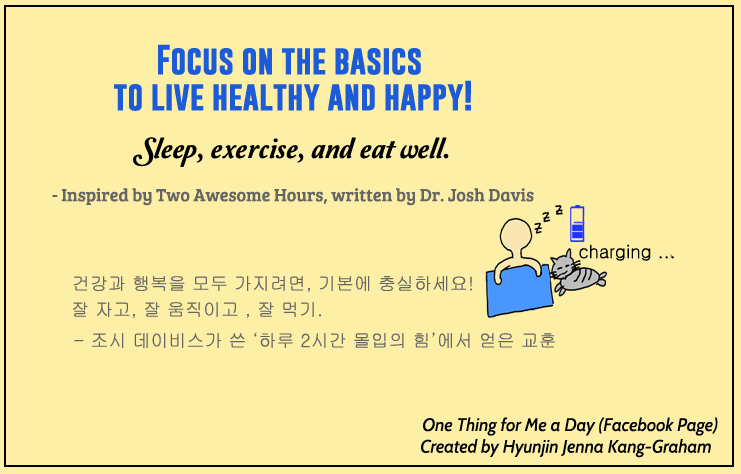
Focus on the Basic to Live Healthy and Happy!

Since I started One Thing for Me a Day, I have become more attentive to changes in my physical and emotional state. The morning routine of meditation, a high protein breakfast, and 30-minute exercise has boosted my mood, energy, and productivity. Last Sunday, I started the day at 6 a.m., a few hours earlier than my usual wake-up time, because I needed to be at a drama shooting location. My husband and I are lovers and partners who support each other in pursuing our interests. He is an actor and commercial model and I am his manager and interpreter. Due to the unusual wake-up time, I felt groggy. To change how I felt, I meditated for 20 minutes.

At the drama location, we both performed with high energy levels. Once the job was over, I felt a lack of energy and motivation to carry out my One Thing for Me a Day. Well, I still meditated and walked for 10 minutes. So, I ordered a pizza as a reward. The pizza didn’t help change my mood. I was frustrated at myself. My husband comforted me and we watched Project Runway together and went to sleep. Today, I feel refreshed and motivated again!

Dr. Josh Davis, the author of Two Awesome Hours, emphasizes the importance to productivity of sleep, exercise, and food. Neuroscience research reveals that we have limited mental energy, and every activity spends this energy. The brain is reasonably stingy with energy and resists any change because change demands more energy. Habits on the other hand operate on autopilot mode, spending less energy. For the strategic use of our energy, we need to prioritize the most important activities, such as activities that we want to turn into new habits.

Here is the gist of the productivity tips I learned from Josh Davis’s book, Two Awesome Hours:

  1. Sleep 7~9 hours. If tired, nap for 10 minutes.
  2. Drink a medium-sized coffee to enhance your concentration. A proper amount of caffeine improves mood and attention whereas too much caffeine causes anxiety and nervousness. Note that caffeine takes 30 minutes to kick in. Add fat (e.g., cream) to extend the effect of caffeine.
  3. Do a 10~40-minute cardio exercise two hours before your most important work. By stabilizing blood sugar, exercise optimizes brain function.
  4. Prioritize the most important work.
  5. Eat more protein and fat and less carbs (e.g., potatoes, white bread, whole wheat bread, white rice, instant oat porridge). Carbs are effective in quickly boosting mood and attention. However, the effect lasts for only about 15 minutes. Protein and fat increase attention and memory for a much longer time.

kittyGetting enough sleep is critical to our mental and physical health. Sleep recharges our energy. A lack of sleep makes us start the day on low energy. The time of sleep also seems to matter. When I get up before 8 a.m., regardless of how many hours I slept, I still feel out of it. Our biological clock is difficult to change.

Further, a lack of proper sleep triggers a vicious cycle of unhealthy habits. When we are tired, we turn to high-carb food and sweets. The brain wants a quick energy boost. The body digests carbs and sugar quicker than protein and fat. Carbs raise blood sugar, which in turn raises serotonin and dopamine levels, quickly lifting mood and energy. However, this effect is brief. To manage blood sugar levels, the pancreas produces insulin. Blood sugar drops rapidly. Then, we feel tired and crave more food. After I changed my breakfast to a high protein meal, I stay full until dinner and experience no drowsiness after eating.

Please like my page and find your own inspiration: https://www.facebook.com/pg/onethingformeaday/

Standard

Change the Brain to Change the Body!

Last year, I read more than 30 books about habits. I knew that making new habits is key to changing life. Regular exercise and a healthy diet were always a part of my New Year’s Resolutions. Last year, I was so determined to make positive changes in my lifestyle that I took a two-month break from work. I informed my clients that I wouldn’t be available until March.

Each day, I started the day with meditation, read a book, and cooked meals at home. Hooray! I felt like I finally made healthy new habits. Research shows that it takes an average of 66 days to form a new habit. I made the mark. However, once I returned to my regular work, I snapped back to my old habits, no exercise and ordering food delivery.

Among all the books I read on habits, the idea of mini-habits from Stephen Guise grabbed my attention. I liked that he emphasizes minimizing neurological and biological resistance – our mind and body’s tendency to stay in default mode. When we try to change, both our mind and body resist, as if they are saying “Just be you. Why the sudden change?” Motivation and willpower are overrated. We need to start with mini-habits that are easy and demand little motivation or willpower.

Here is the gist of the weight loss tips I learned from Stephen Guise’s book, Mini Habits for Weight Loss: Stop Dieting. Form New Habits.

  1. Start an exercise mini-habit! (e.g., 1 push-up a day)
  2. Cook one meal at home. Find a quick and easy cooking routine. (e.g., egg breakfast, stir-fry dishes).
  3. Add healthy foods to your diet! No need to ban any food.
  4. Keep track of your mini-habits.
  5. Reward yourself for your success.
habit tracker

My Habit-tracking Jar: One kitty pin for One thing for me a day

This idea of mini-habits inspired my One Thing for Me a Day idea. Today, I felt heavy and woke up around noon. Although I have been riding my stationary bike for 30 minutes lately, I wasn’t sure I could do it today. I got on the bike anyway, thinking ‘I will just do it for 10 minutes.’ Once I got started, it seemed easier than I thought. Eventually, I did it for 30 minutes as usual. The exercise boosted my mood and I read a book and wrote a new blog article as I have done for the last four days.

Please like my page and find your own inspiration: https://www.facebook.com/pg/onethingformeaday/

Inspiring Quote: “I fear not the man who has practiced 10,000 kicks one, but I fear the man who has practiced one kick 10,000 times” – Bruce Lee


Standard

Move Your Body to Get Smart!


Over the years, I have heard of the benefits of regular exercise countless times. However, I have never liked physical activity. Physical education was my least favorite subject in school, and I have never exercised regularly. Despite my stationary lifestyle, I have stayed relatively slim and at a similar weight range, fluctuating between 50kg (110lbs) and 55 kg (121 lbs) with a height of 162cm (5 feet and 4 inches).

presentBefore the beginning of the New Year, I got a health checkup. The results showed that my BMI is normal, but I have above average body fat: 31%. The normal body fat range for a woman of my age – in my 30s – is between 18% and 28%. The doctor recommended that I lose 3.7kg (8lbs) of fat and build some muscle, as I have a below normal amount of muscle. Despite the widespread belief, exercise has little to do with weight loss. Dietary change has a lot more impact on losing weight. To lose weight, we need to cut down on carbs and sugar and consume more protein and fat.
ExerciseWhat finally pushed me to exercise was the impact of exercise on neuroplasticity. Exercise makes new brain cells (neurons) and strengthens the connection between the cells, which means it optimizes brain function. Simply put, exercise makes us smarter, as long as we put the newly-generated cells to use, like learning something new. Otherwise, the cells will die because they have nothing to do. A combination of regular exercise and continued learning is critical to a healthy and happy life. To learn more about this, read “Spark: The Revolutionary New Science of Exercise and the Brain” written by John J. Ratey and Eric Hagerman.

When I learned about this connection between exercise and neuroplasticity, exercise became much more important to me. Being smart is an important part of my identity. And, I want to be smarter. As an extremely curious person, I am constantly learning. I read at least 4~5 books a week on various topics. But, I am limiting the growth potential of my brain cells by not moving my body. That’s not good.

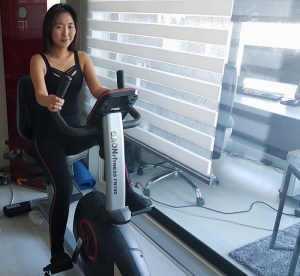
To maximize the benefit of exercise, it is best to exercise after breakfast. Exercise after eating stabilizes our blood sugar level and prevents fat storage. It also optimizes our brain and boosts the happiness hormone of serotonin. I actually started practicing One Thing for Me a Day about three weeks ago and have been exercising regularly for the last three weeks. Initially, I started with a 10-minute stationary bike ride, and then 20 minutes and now 30 minutes.

I am feeling more optimistic, more motivated, and generally happier.  Please like my page and find your own inspiration: https://www.facebook.com/pg/onethingformeaday/

Standard

Reading Desire: the Start

On January 1, 2018, I start this blog: Reading Desire. As the payment for the domain was going through, I could feel my anticipation changing to excitement. I am beginning my journey as a global writer!

I have been creating online content since 2000, but have mostly written in my native language of Korean. My 10-year-old Korean-language blog brought me a lot of success. What I feel most proud of is creating the largest online community of international/ intercultural couples in Korea. This group of people were long subjected to negative stereotypes and hid their relationships with their foreign partners even from their family. Over the years, my blog and online community helped empower them, changing the Korean society to accept and even celebrate their identity.

Now, I want to empower people around world by helping them (re)gain their happiness and helping businesses market their products and services to enhance happiness. Most of our actions are driven by our desire to live happy. “Live” comes before “Happy,” which means survival is the priority. To survive, we need food and a home. Then, what brings us food and a home? Money. And money comes from jobs. Career success is critical to our survival.

readingdesire1When our survival needs are met, desire for happiness becomes more important. However, there is an unexpected roadblock to happiness. After living so focused on making money and succeeding in our jobs, many of us become used to living to work. For the sake of career success, we sacrifice our health and relationships – two essential elements of our happiness. Like most people around me, I worked, worked, and worked. I was doing what I was good at and making enough money to live in a nice house, eat out regularly, and travel abroad. I was supposed to be happy, but I wasn’t.

‘Why am I not happy and motivated?’ 

I decided to pause. I informed my clients that I was temporarily unavailable. During my break, I put my focus on my desires. I read as much as I wanted, took time to cook and exercise, and practiced self-guided hypnosis. At the end of my break, I wrote down all my interests, skills, experience, and personal traits.

readingdesire2And then, I asked myself, “What would I still want to do even if I became wealthy?” My answer was “I want to create content that impacts people.” I want to live happy to succeed and succeed to live happy, and help others do the same.

I continued to ask myself: “How?” Then, I thought about my biggest strengths: an unbounded desire for reading/learning and expertise in communication. I will empower people and businesses through the power of knowledge and language.

I start this blog for two main purposes:

  • To explore the desires that drive human behaviors and identify ways to use language to empower people.
  • To integrate new understandings of the brain into copywriting and social media marketing and revolutionize copywriting and marketing practices.

Using the knowledge of how our brain works, I will find how to use language to help people feel happy and motivated to succeed, and help businesses connect with consumers and bring more profits. Reading desire is key to leading success!

This blog will record my journey of learning through reading. I will share my learning from books on a variety of topics, ranging from happiness, neuroscience, rhetoric, copywriting, to others that will come along later. I am excited to take on this challenge toward achieving my goal: to live to work toward the life of my dreams. If you want to learn about how to live happy, or want to apply the knowledge of desire and the brain to marketing, subscribe to my blog: readingdesire.com

A new post will be coming every Monday (and more on other days)!


Standard