
 I am interested in reading desire because desire motivates behavior. We act to satisfy our desires in pursuit of happiness. The goal of marketing and copywriting is to cause a certain attitude and behavior in consumers. As a market researcher, I have often seen the disconnection between marketing copy and consumers. While the company focuses on the best features of its product, consumers asks “So, what does it do for me?” To grab consumers, we need to identify what desires are connected to our products.
Desire is based on needs. We cannot create needs that do not exist in people’s minds. The creation of products should start with existing needs. An attempt to convince consumers of needs that they don’t see leads us to a rocky road. In 2017, Samsung introduced its own AI assistant Bixby on its smartphones. Google Bixby. On the first page, you will see “How to kill the Samsung Bixby button” and “How to disable the Bixby key.” Bixby is perceived as one of the most irritating features. Consumer complaint boils down to “No one asked for it. I don’t want to be force-fed.”
 Understanding consumer needs can make or break our business. Abraham Maslow provided valuable insights into human needs. Maslow suggested that we are motivated by five hierarchical sets of basic needs: physiological, safety, love, esteem, and self-actualization needs. Unmet needs cause anxiety or fear, driving us to act. What is tricky is that we are not always conscious of our needs. Our brain is wired to protect our survival, so basic needs drive our behavior on an unconscious level, which we call the fight-or-flight response. Maslow also pointed out that people tend to be unconscious of the most important and basic needs. For successful marketing, we need to address not only conscious but also unconscious needs or desires.
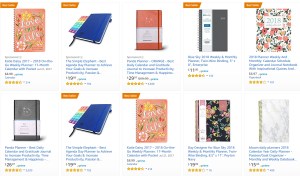 Take a planner for an example. In the beginning of the year, many people buy a planner. Search “planner” on Amazon. Currently, the most reviewed and highest ranked planner is Panda Planner, sold at $26.97~$29.97, higher than many other planners. Look at its copy: “Best Daily Calendar and Gratitude Journal to Increase Productivity, Time Management & Happiness.” In its product description, it promotes its benefit of reducing anxiety and bringing you happiness. It directly addresses the desires that drive people to buy a planner.
Persuasive copy can give our products an edge among competitors. Consumers are attracted to products that speak to their needs. Before creating copy or marketing materials, list all the needs or desires that are connected to your product. Human behavior is usually motivated by multiple needs or desires. What needs does your product help satisfy? Instead of focusing merely on superficial needs, think about how your product helps consumers satisfy a sense of safety/security, love/belonging and esteem, and ultimately helps them live happy.
Take-away: Read the desires that drive consumers to buy your product.
- References: A Theory of Human Motivation (Abraham Maslow), Toward a Psychology of Being (Abraham Maslow)
 Reading Desire