

Over the years, I have heard of the benefits of regular exercise countless times. However, I have never liked physical activity. Physical education was my least favorite subject in school, and I have never exercised regularly. Despite my stationary lifestyle, I have stayed relatively slim and at a similar weight range, fluctuating between 50kg (110lbs) and 55 kg (121 lbs) with a height of 162cm (5 feet and 4 inches).
 Before the beginning of the New Year, I got a health checkup. The results showed that my BMI is normal, but I have above average body fat: 31%. The normal body fat range for a woman of my age – in my 30s – is between 18% and 28%. The doctor recommended that I lose 3.7kg (8lbs) of fat and build some muscle, as I have a below normal amount of muscle. Despite the widespread belief, exercise has little to do with weight loss. Dietary change has a lot more impact on losing weight. To lose weight, we need to cut down on carbs and sugar and consume more protein and fat.
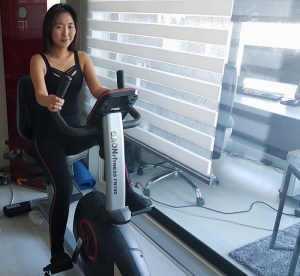 What finally pushed me to exercise was the impact of exercise on neuroplasticity. Exercise makes new brain cells (neurons) and strengthens the connection between the cells, which means it optimizes brain function. Simply put, exercise makes us smarter, as long as we put the newly-generated cells to use, like learning something new. Otherwise, the cells will die because they have nothing to do. A combination of regular exercise and continued learning is critical to a healthy and happy life. To learn more about this, read “Spark: The Revolutionary New Science of Exercise and the Brain” written by John J. Ratey and Eric Hagerman.
When I learned about this connection between exercise and neuroplasticity, exercise became much more important to me. Being smart is an important part of my identity. And, I want to be smarter. As an extremely curious person, I am constantly learning. I read at least 4~5 books a week on various topics. But, I am limiting the growth potential of my brain cells by not moving my body. That’s not good.
To maximize the benefit of exercise, it is best to exercise after breakfast. Exercise after eating stabilizes our blood sugar level and prevents fat storage. It also optimizes our brain and boosts the happiness hormone of serotonin. I actually started practicing One Thing for Me a Day about three weeks ago and have been exercising regularly for the last three weeks. Initially, I started with a 10-minute stationary bike ride, and then 20 minutes and now 30 minutes.
I am feeling more optimistic, more motivated, and generally happier. Please like my page and find your own inspiration: https://www.facebook.com/pg/onethingformeaday/
 Reading Desire